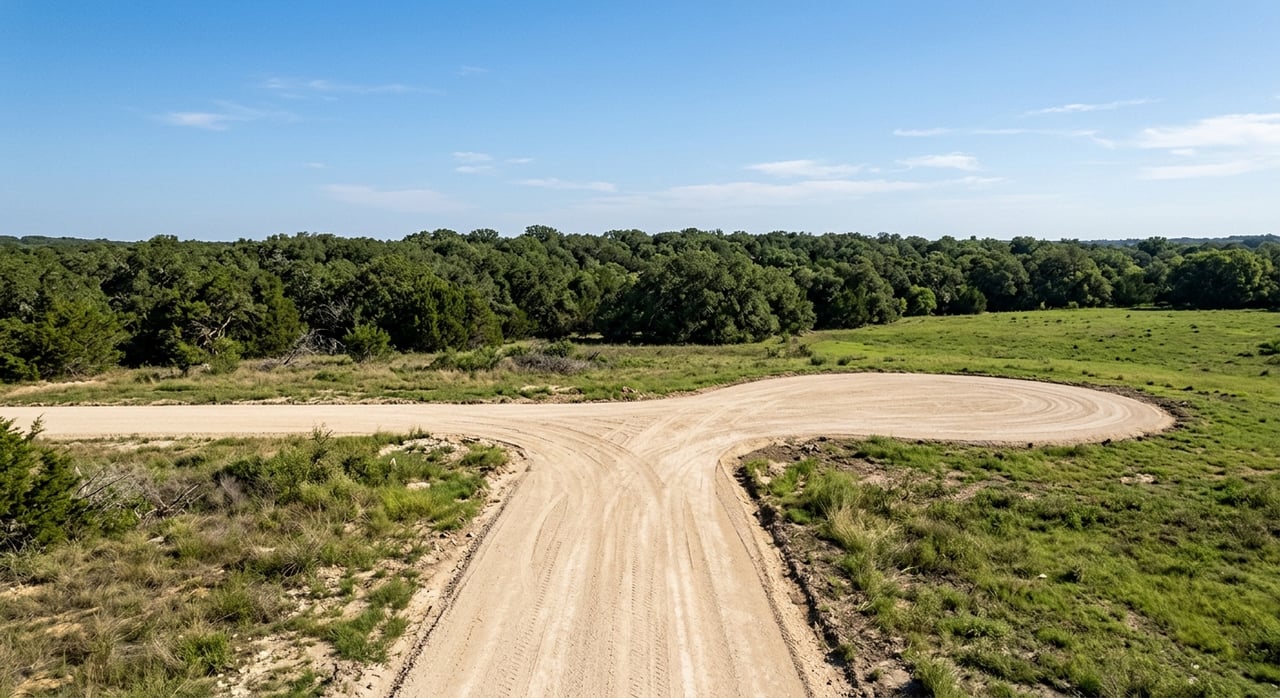
If you are looking at acreage near Florence, it is easy to start by sketching out how many homesites might fit. The real first step is less exciting, but far more important: finding out which rules actually apply to the tract. That one detail can shape access, utilities, septic options, drainage requirements, and your true lot yield. If you want a cleaner path from raw land to buildable homesites, these are the site planning priorities to review first. Let’s dive in.
Check jurisdiction before anything else
For acreage near Florence, the rulebook changes depending on whether the property sits inside the City of Florence, inside the city’s extraterritorial jurisdiction, or in unincorporated Williamson County. That matters because the city and county do not review land the same way. A tract that looks straightforward on paper can become much more limited once the correct jurisdiction is confirmed.
Within the city and ETJ, Florence’s subdivision ordinance governs plat approval and related development requirements. The city requires plat approval before a plat can be recorded or lots can be improved or sold. The ordinance also gives the city authority to deny utilities and building permits for subdivisions that do not comply.
Outside city limits, Williamson County says it has no zoning regulations. That does not mean there are no rules. It means your planning work will center more on subdivision standards, roads, septic, drainage, and floodplain review than on zoning controls.
Williamson County also notes that if a property is inside a city or ETJ, you should check with that city first. That is why a jurisdiction check should come before any rough lot-count exercise. Before you estimate yield, you need to know which standards control the site.
Understand Florence and county review paths
In Florence, Building Services and Permits handles processes tied to plats, rezoning, and special use permits. The Planning and Zoning Board and City Council also play roles in land-use compatibility and zoning matters. In practical terms, that means early site planning is not just about drawing lot lines. It is about showing that your concept fits the local framework.
On the county side, it is also important to work from the latest rules. Williamson County revised its subdivision regulations effective March 4, 2025. If you are reviewing an older plat, a prior marketing package, or a basic lot sketch, make sure your feasibility work reflects the current county standards.
Test access early
Access is one of the biggest make-or-break items for acreage near Florence. A tract may have road frontage, but that does not automatically mean the layout will work well for a future split or subdivision. Road design, frontage, drainage, and permitting can all affect what is actually possible.
Inside Florence, the subdivision ordinance requires each lot to have adequate access to an existing or proposed public street. It also requires at least 45 feet of frontage on a public right-of-way and direct frontage on an approved public street. Private streets are prohibited under the city ordinance.
The city also expects lot shapes to be generally rectangular, and it wants street systems laid out with adjoining land and future street connections in mind. That can affect where lots, corner turns, and future extensions make sense. A simple long-and-narrow layout may not perform as well as it first appears.
County road access has its own limits
In unincorporated Williamson County, roadway approval still carries important design limits. New roadways that do not connect to an existing public road will not be approved. The owner must improve existing roads within the plat and boundary roads with direct access.
The county may also require lots along arterial roads to use an internal platted road instead of separate direct driveway access. If the tract reaches a TxDOT roadway, county rules require TxDOT approval. So access is not just a frontage question. It is also a question of which roadway agency has authority and what improvements may be required.
Driveways, culverts, and drainage matter
For individual driveways on county roads, Williamson County now handles driveway permits online. The county’s driveway policy explains that the required driveway type depends on roadside drainage conditions. When a culvert is needed, the county sizes it.
That means access planning should include more than a legal review. You also need to think through grading, drainage flow, culvert requirements, and the actual space roads and intersections will consume. On many acreage tracts, those elements reduce the area available for homesites more than buyers first expect.
Verify utilities and wastewater options
Utilities are one of the biggest feasibility gates for acreage near Florence. The City of Florence states that it provides water, wastewater, and solid waste services to its citizens. Its subdivision ordinance also requires approved water supply and wastewater systems.
If city collection is available, the City Council can require connection to the city wastewater system. Outside the city limits, on-site disposal systems may be allowed if the soils and percolation support them and the lots meet county minimum area requirements. That can create a very different site plan depending on whether city service is available.
One especially important point for ETJ property is utility service. The city states that subdivisions in the ETJ cannot receive city-owned utility service unless the owner agrees to annex the entire subdivision. If you are evaluating acreage in the Florence ETJ, that issue should be clarified early because it can affect both project structure and future costs.
Septic planning starts with the site
If a tract will need septic, Williamson County’s OSSF program regulates septic systems, processes permits, and performs inspections. TCEQ states that OSSFs must be designed from a site evaluation that accounts for local conditions. TCEQ also states that almost all OSSFs require a permit before construction, installation, repair, extension, or alteration.
For buyers and sellers, the key takeaway is simple: septic feasibility is not something to assume. Soils, drainage, reserve area, and lot configuration are all part of the buildability test. If the tract depends on on-site wastewater, those conditions should be checked before you rely on a homesite count.
Review floodplain and drainage before layout
Floodplain and drainage should be early-stage review items, not last-minute cleanup items. Williamson County says FEMA revised floodplain boundaries in 2019, and some county floodplains still rely on older studies. The county also participates in the National Flood Insurance Program.
For county properties, the Road and Bridge Division says its Certification of Compliance verifies whether a property is in a flood plain. That makes floodplain review a smart first move before you commit to roads, driveway locations, or homesite placement. A layout that looks efficient on gross acreage can change quickly once floodplain limits are mapped.
Drainage review is also a major part of the planning process. County rules require utility easements to be shown and coordinated with providers, and current county drainage review materials require refined drainage information. In Florence, the subdivision ordinance requires drainage plans prepared by a professional engineer.
The city also states that post-development runoff cannot exceed predevelopment runoff for the stated storm standard, with 100-year flow contained in drainage easements. In plain terms, drainage is not just a box to check. It influences how much land is truly usable and where roads and lots can go.
Estimate yield from buildable area
One of the most common mistakes with acreage is using gross acreage as if every square foot can become a homesite. Near Florence, that can lead to unrealistic expectations. Roads, drainage features, easements, floodplain, setbacks, and wastewater needs all cut into the area that can actually support development.
If the property is inside Florence, zoning can become a major yield driver. The city’s zoning summary shows different minimum lot areas by district, including AG at 1 acre and SF-1 at 5,000 square feet. At the same time, the subdivision ordinance says sewered lots must be at least 10,000 square feet and unsewered lots must meet county and TNRCC requirements for on-site wastewater disposal.
The city ordinance also says lots inside the city must conform to zoning minimum area, width, and depth. So even when a zoning district appears flexible, subdivision standards and utility conditions still shape what is feasible. Yield should be based on all applicable rules together, not one number viewed in isolation.
County land still has yield constraints
Outside the city, Williamson County has no zoning, but yield is still constrained by physical and platting requirements. County subdivision regulations state that any lot that could potentially be further subdivided must have a minimum width of 50 feet. The county also excludes recognizable wet-weather creek beds, bodies of water, and dedicated public road easements from lot-area calculations.
The county’s plat review expects topographic contours and drainage documentation. Florence’s concept-plan process can also require a preview of thoroughfare patterns, environmental constraints, traffic impact, road capacities, water yields, and hydrologic studies. That is why the most useful yield estimate comes from buildable area, not just deed acreage.
Follow the right planning sequence
For acreage near Florence, the strongest planning sequence is straightforward. Start with a current survey, then confirm jurisdiction, then verify utility and septic options, then review floodplain and drainage, then move to a civil concept sketch, and only after that estimate final lot yield.
That order helps you avoid spending time on layouts that do not fit the site or the governing rules. It also creates a more reliable path for seller planning, buyer due diligence, and lender review. When the early work is done in the right order, your decisions become clearer and your risk usually goes down.
Why technical due diligence matters
Acreage can offer real upside near Florence, but only if the planning is grounded in facts. The same tract can produce very different results depending on whether it is in the city, the ETJ, or unincorporated county land. Access, utilities, septic, floodplain, and drainage are often what determine whether a property feels simple or becomes expensive to untangle.
That is why technical due diligence matters so much on the front end. A clean feasibility review can help you understand what the land can realistically support before you price it, market it, buy it, or begin development planning. If you want experienced help evaluating acreage near Florence, Land Homes Texas can help you request a feasibility review.
FAQs
What should you check first for acreage near Florence?
- The first step is confirming whether the property is inside the City of Florence, inside the Florence ETJ, or in unincorporated Williamson County, because that changes the approval path and site planning rules.
Can acreage in the Florence ETJ use city utilities?
- The City of Florence states that subdivisions in the ETJ cannot receive city-owned utility service unless the owner agrees to annex the entire subdivision.
Does acreage near Florence need septic approval?
- If the tract will use on-site wastewater, Williamson County’s OSSF program regulates permits and inspections, and septic design must be based on a site evaluation that reflects local conditions.
How does road access affect acreage planning near Florence?
- Access can affect frontage, driveway permits, culvert sizing, road improvements, and whether an internal road system is needed, all of which can reduce the land area available for homesites.
Why is gross acreage not the same as buildable acreage near Florence?
- Gross acreage often includes land that may be lost to roads, drainage easements, floodplain, creek areas, utility easements, setbacks, and wastewater requirements, so actual yield should be based on buildable area instead.
Who should you hire first for a Florence-area acreage review?
- A surveyor and civil engineer are strong early partners because both city and county review processes rely on engineered plats, drainage information, and utility coordination.