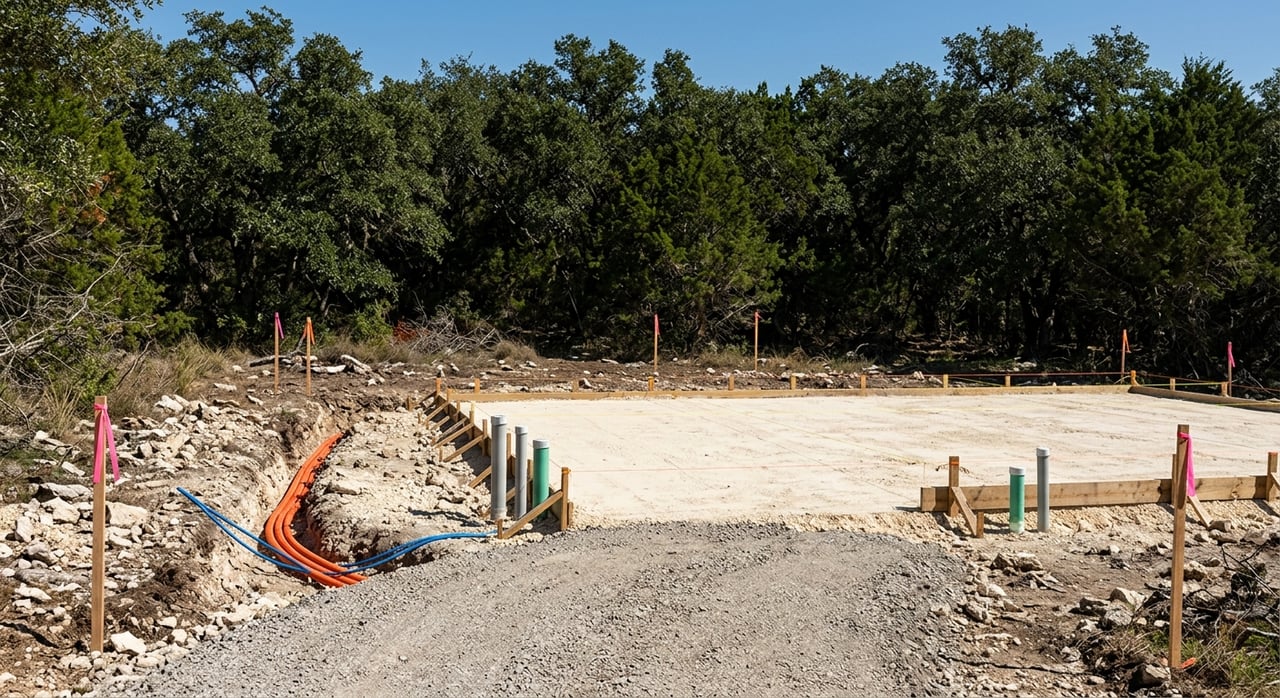
If you have ever looked at a raw acreage tract in Georgetown and thought, "This could be the perfect custom homesite," you are not alone. The challenge is that land can look simple from the road while hiding major questions about jurisdiction, utilities, floodplain, access, and permitting. If you want to move from idea to buildable homesite with fewer surprises, understanding the local sequence matters. Let’s dive in.
Start With Jurisdiction First
In the Georgetown area, the first question is not house design, driveway style, or even builder selection. It is whether the tract is inside Georgetown city limits, in Georgetown’s ETJ, or in unincorporated Williamson County.
That one detail shapes what rules, reviews, and agencies matter most. Williamson County states that it does not have general zoning authority and does not issue most building permits in unincorporated areas, while parcels inside city limits are subject to city zoning rules. The county also advises buyers to check with the city if a property is in a city or ETJ.
Georgetown’s public planning and utility maps make this step practical. Those maps track city limits, ETJ, zoning, FEMA flood zones, water and wastewater infrastructure, electric providers, and original surveys. For a buyer or landowner, that means jurisdiction and service territory should be your first filters before you finalize any homesite plan.
Use a Survey Early
A current survey, or at least a survey-grade site exhibit, is one of the most useful early documents in the process. It helps define the tract clearly and supports later decisions about setbacks, access, drainage, utilities, and building placement.
This is also consistent with local filing requirements. Williamson County’s Certificate of Compliance form requires a drawing showing proposed construction for property larger than 2 acres, and the county’s OSSF process asks for a survey, site plan, soil evaluation, and floor plan. In other words, site geometry enters the process much earlier than many buyers expect.
Check Floodplain And Site Constraints Early
Before refining your home design, you need to understand whether the land has physical or regulatory constraints. Floodplain, drainage, and aquifer-related issues can all affect where and how a homesite can be developed.
In unincorporated Williamson County, a Certificate of Compliance is required for development outside a floodplain. If the property is within or adjacent to the 100-year floodplain, a Floodplain Development Permit may be required. The county also notes that if a proposed OSSF is in a floodplain, a Floodplain Permit is required instead of a Certificate of Compliance, not both.
Georgetown’s public mapping also includes FEMA Flood Zones and Edwards Aquifer Recharge Zones. That makes early screening important, especially before you spend time advancing a house plan that may need to be revised around site limitations.
Confirm Water, Sewer, And Electric Service
One of the biggest mistakes buyers make with raw acreage is assuming utilities are automatic. In Georgetown, utility availability is parcel-specific.
Georgetown’s utility maps show water service areas, wastewater boundaries, water mains, wastewater mains, and electric service providers. The water-service layer explains that a Certificate of Convenience and Necessity, or CCN, authorizes a utility to provide water or sewer service to a specific area and obligates that utility to serve customers in that area.
The practical takeaway is simple. You should verify the actual service map for the tract before assuming municipal water or sewer is available.
Electric service works the same way. Georgetown’s mapping identifies service territories that may include Georgetown, Oncor, PEC, or combinations of those providers. That means two nearby tracts may not have the same electric provider, even if they look similar on the ground.
Know When Septic Is Part Of The Plan
If the tract is not served by sewer, septic may become a key part of homesite planning. In unincorporated areas and ETJ locations, Williamson County’s OSSF program is often the relevant path.
The county says an OSSF is likely required if the County Address Search shows the city as "Unincorporated" or lists an ETJ. Williamson County also now accepts OSSF applications only online through MyGovernmentOnline.
The county’s application packet gives you a good sense of what matters most at this stage. Required uploads include items such as a survey, OSSF design plan, soil evaluation, site plan, and floor plan. That tells you the septic review is driven by site conditions and technical layout, not cosmetic home details.
Address Access And Driveway Questions
A homesite is not truly workable if access is unclear. This is especially important if your proposed driveway connects to a county-maintained road.
Williamson County requires a driveway permit for a proposed or modified driveway that ties into a county-maintained road. The county also requires a utility permit for utility installation within county right-of-way.
This step matters because access is not just about convenience. It can affect timing, design, and cost, especially when improvements touch county right-of-way or when utility routing needs to cross county-controlled areas.
Plan Early If The Acreage Will Be Divided
If your Georgetown acreage may become more than one homesite, platting and addressing should move to the front of the conversation. These are not cleanup items to handle after everything else is done.
Williamson County points developers to its subdivision regulations for platting procedures, road and drainage construction, and street names and markers. The county also says that new house addresses are handled through County GIS and 911 Addressing.
If a new street is involved, the county’s street-name list must be checked before reserving a new name. For landowners exploring a split, family partition, or small multi-homesite layout, these details directly affect feasibility.
The Usual Pressure Points In Georgetown
For most buyers and owner-builders, the same local questions come up again and again. They tend to shape whether a raw tract can realistically become a custom homesite without major delay.
Here are the key items to verify early:
- Whether the tract is in Georgetown city limits, ETJ, or unincorporated Williamson County
- Whether water and sewer are available, or whether OSSF will be needed
- Whether FEMA floodplain or Edwards Aquifer constraints affect the site
- Whether the driveway will connect to a county-maintained road
- Whether platting, a new address, or street-name reservation is required
When you answer those questions first, the rest of the project usually becomes clearer. You can make better decisions about home placement, timeline, and budget before moving too far ahead.
A Practical Georgetown Sequence
If you want a simple roadmap, the process usually works best in this order:
- Confirm jurisdiction using Georgetown and Williamson County mapping tools
- Order a current survey or site exhibit
- Review floodplain, drainage, and aquifer-related constraints
- Verify water, sewer, and electric service territories
- Determine whether OSSF is needed
- Check driveway and right-of-way requirements
- Address platting, addressing, or street-name needs if the land will be divided
This sequence helps reduce rework. It also reflects how local agencies and utility systems are organized in the Georgetown area.
Why Local Coordination Matters
Turning raw acreage into a custom homesite is not just a real estate decision. It is a technical project with land-use, infrastructure, and timing issues that need to be aligned.
That is why a coordinated approach matters so much in Georgetown and across Williamson County. When you line up jurisdiction, survey work, utility verification, site constraints, and permitting in the right order, you can reduce friction and move forward with more confidence.
If you are evaluating Georgetown acreage and want a clearer path from raw land to build-ready homesite, Land Homes Texas can help you think through the feasibility, coordination, and next steps.
FAQs
What should you check first on raw acreage in Georgetown?
- The first thing to confirm is whether the property is inside Georgetown city limits, in Georgetown’s ETJ, or in unincorporated Williamson County, because that affects the applicable rules, reviews, and service questions.
How do utilities work for Georgetown acreage tracts?
- Water, wastewater, and electric service are parcel-specific, so you should verify current Georgetown service maps rather than assume utility service is available just because nearby properties are improved.
When is septic likely needed for a Georgetown-area homesite?
- In unincorporated areas and ETJ locations where sewer service is not available, Williamson County’s OSSF process is often the relevant path, and the county indicates an OSSF is likely required when the County Address Search shows "Unincorporated" or an ETJ.
What floodplain issue matters for Williamson County land?
- In unincorporated Williamson County, development outside a floodplain may require a Certificate of Compliance, while property within or adjacent to the 100-year floodplain may require a Floodplain Development Permit.
Do you need a permit for a driveway on Georgetown acreage?
- If the proposed or modified driveway connects to a county-maintained road, Williamson County requires a driveway permit.
When do platting and addressing matter for Georgetown land?
- If the acreage will be divided into more than one homesite, platting, road and drainage requirements, new addressing, and possible street-name review should be handled early in the feasibility process.