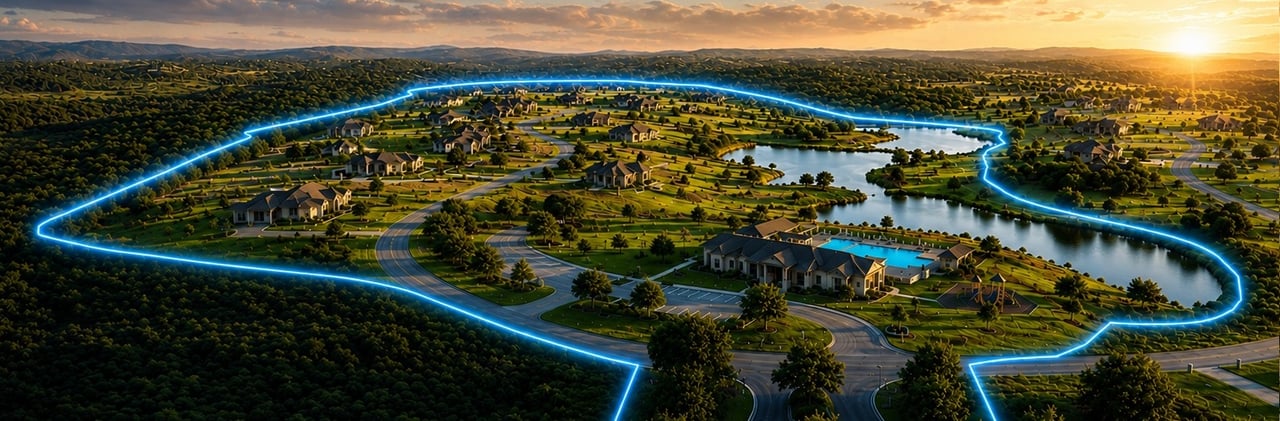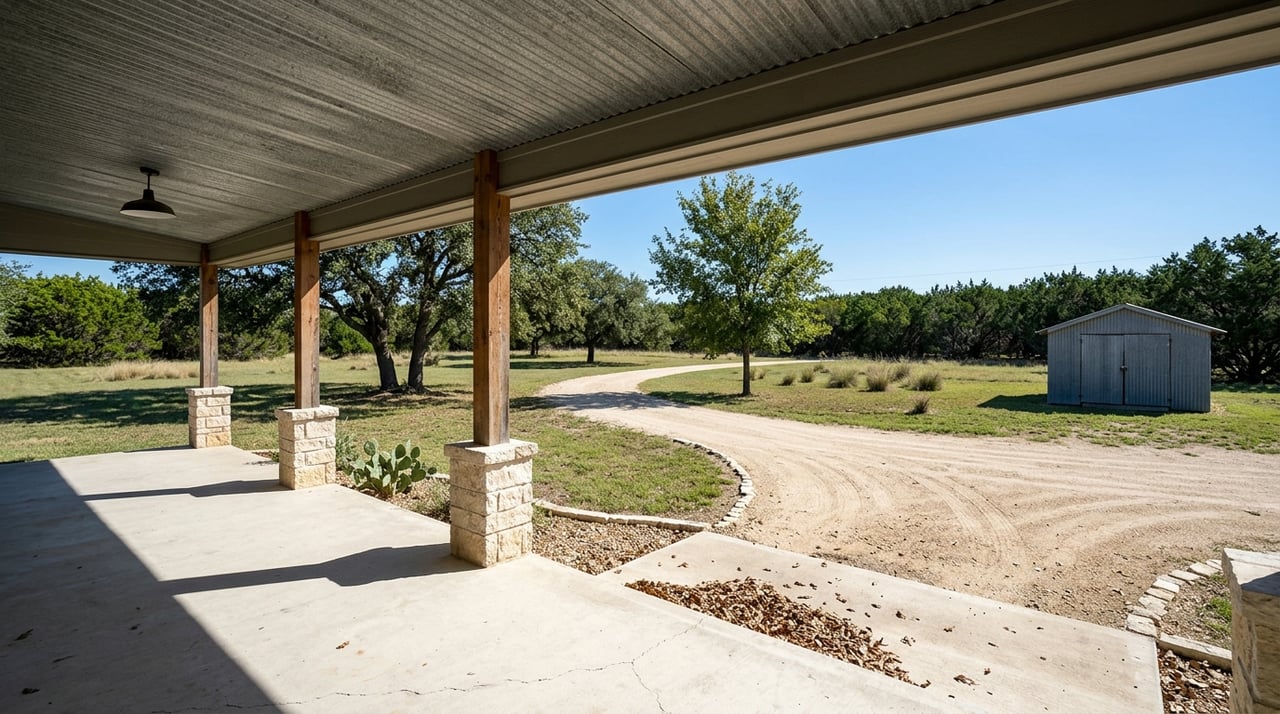
If Austin feels tighter, busier, and more expensive than the lifestyle you want, you are not alone. Many buyers are looking beyond the suburban edge for places where land, privacy, and a slower daily rhythm are still possible within reach of the metro. This guide will help you understand Austin’s exurban land belt, what kinds of properties you’ll find there, and what due diligence matters most before you buy. Let’s dive in.
What the exurban land belt means
For Austin-area buyers, the exurban land belt is the ring of smaller towns and rural tracts that still offer practical access to the metro while feeling distinctly less dense. In this conversation, that often includes places like Burnet, Bertram, Florence, and Salado.
These are not full suburban satellites in the usual sense. They are smaller markets with a different scale and pace, which is part of the appeal if you want more room and a more land-focused lifestyle.
Where buyers are looking
Burnet sits about 55 miles northwest of Austin. Florence describes itself as about 40 miles north of Austin, while Salado sits along the I-35 corridor between Austin and Waco.
Bertram is often framed as a gateway to the Hill Country that still stays convenient to the big city. In practical terms, each location gives you a different version of the tradeoff between access and elbow room.
Town size changes the feel
The population numbers help explain why these places feel different from suburban Austin. Burnet’s latest Census estimate is 6,939, Salado lists 2,394 residents, Bertram lists 2,060, and Florence cites 1,136 in the 2010 census.
That scale matters when you are comparing lifestyle, inventory, and expectations. As towns get smaller and farther from Austin, the market tends to shift away from standard neighborhood lots and more toward acreage, ranchettes, and ranch-style holdings.
What kind of land you can find
One reason buyers keep pushing outward is simple: there is still a broad mix of tract sizes in these markets. Current inventory snapshots across the area show everything from small homesite lots to large ranch parcels.
Because listings change quickly, no single tract size is “typical” every day. Still, the current market supports three broad categories you are likely to encounter: homesite lots, ranchettes, and larger ranch tracts.
Burnet inventory snapshot
Burnet shows a mix of smaller and larger options. Current listings include properties under 10 acres, with examples such as 0.5-acre, 1.05-acre, 5-acre, and 7.39-acre parcels.
At the county level, Burnet County undeveloped land listings total roughly 6,000 acres for sale, with an average lot size of 57 acres and an average price around $1.49 million. That tells you Burnet can serve both buyers who want a manageable homesite and buyers searching for major acreage.
Bertram inventory snapshot
Bertram also spans a wide range. Current listings include 1-acre, 4.6-acre, and 52.6-acre tracts, with a dedicated set of 5- to 10-acre options in the market as well.
That range is part of Bertram’s draw in the Austin exurban corridor. You can look at smaller build sites, mid-size land holdings, or larger tracts without leaving the same general market.
Florence inventory snapshot
Florence leans smaller and more rural in feel, but its inventory still covers a wide spread of acreage. Current listings include 1- to 5-acre tracts, 5- to 10-acre tracts, and larger parcels around 20, 32, 37, and more than 70 acres.
If you are searching for a place that feels more removed from the city but still north of Austin, Florence often enters the conversation for exactly that reason.
Salado inventory snapshot
Salado offers one of the more mixed profiles in the belt. Current listings include subdivision lots from about 0.56 to 3.7 acres, along with 2-acre, 4.5-acre, 14-acre, 30-acre, 64.5-acre, 120-acre, and 137-acre examples.
That means Salado is not just a small-lot or just a ranch market. It can fit buyers looking for a custom homesite as well as those wanting much more land.
Why Austin buyers move outward
The move is not only about getting more acreage. It is also about changing your day-to-day setting.
Salado highlights shopping, dining, lodging, live music, festivals, a cultural arts district, and creekside open space. Burnet emphasizes civic activity and its connection to the Highland Lakes corridor, while Florence presents itself as a rural community north of Austin and Bertram is known as a quieter Hill Country gateway.
Access still matters
Road corridors are a big part of the decision. TxDOT describes SH 71 as a main route from Austin into the Hill Country and Highland Lakes region, and says US 281 functions as a commuter highway and freight corridor in the Austin area.
Salado sits on the I-35 spine, which gives it a different access profile from the Burnet and Bertram side of the map. When you compare towns, the real question is not just distance from Austin. It is how often you need to drive in and which route you will depend on.
How to judge what is practical
“How far out is too far?” depends on your starting point in Austin, your schedule, and your tolerance for drive time. A tract that feels realistic for a hybrid work routine may feel less practical if you need to be in the city every day.
That is why corridor analysis matters as much as map distance. A property’s location along I-35, SH 71, US 281, or connecting roads can shape your weekly routine more than the raw mileage alone.
Due diligence matters more with land
When you buy in the exurban land belt, the property search is only half the job. The other half is confirming that the tract works for your intended use.
That starts with utilities, access, septic, permitting, and taxes. On land, these details can shape your timeline, cost, and even whether you can build as planned.
Utilities are not the same everywhere
Utility service varies by town. Burnet owns and operates its own water, wastewater, electric, solid waste, and recycling systems.
Florence provides water, wastewater, and solid waste. Bertram’s utility department handles water, sewer, and trash, while Salado uses a mixed model with village wastewater service, Salado Water Supply Corporation water, and Oncor electricity.
Septic and wells need early review
If a property is not fully served by municipal utilities, you need answers early. The Texas Commission on Environmental Quality says permits are required for on-site sewage facilities such as septic systems, and system design should be based on a site evaluation.
For water wells, the state points buyers toward water-well information, while well drilling and pump installation fall under the Texas Department of Licensing and Regulation. In plain terms, if you are considering rural acreage, septic and water planning should happen before you assume you can build right away.
Building rules change by location
Approval paths differ depending on whether a tract is inside town limits or in a more rural area. Salado handles planning, zoning, permitting, subdivision, building codes, and wastewater-related resource coordination through its development services structure.
Bertram has a permit and inspection portal, and Florence has a Building Services and Permits department. That means your next step after finding a property is not guessing. It is confirming which authority applies and what approvals your plans will require.
Taxes and access can surprise buyers
Property taxes and public access details are easy to underestimate when you focus only on acreage and price. Salado’s community profile lists multiple taxing entities, including the Village, Bell County, Bell County ESD #1, Salado ISD, and Clearwater UWCD.
Access details matter too. Bertram notes that visible street address numbers are required for emergency response and that the city works with Burnet County addressing, which is a useful reminder that even basic site-readiness items deserve attention.
Water conservation affects planning
Water service is not just about whether a line exists. Burnet notes that it owns its water system, uses a city well system in parts of town, and operates under year-round water-use restrictions tied to a local conservation plan.
If you are evaluating a homesite, ranchette, or larger tract, those rules can shape how you think about future use and long-term ownership.
Matching the town to your goals
Each node in the belt tends to fit a different buyer profile. Burnet often reads as the more service-rich small city option, while Salado offers an I-35 location with arts, tourism, and a village setting.
Florence skews smaller and more rural, and Bertram fits buyers who want a quieter Burnet County location in the same Hill Country orbit. None of those labels is absolute, but they are a useful starting point as you narrow your search.
Why a technical review helps
Buying land near Austin is not just a lifestyle choice. It is also a feasibility decision.
That is especially true when you are comparing raw acreage, homesites, or tracts that may need work before they are truly build-ready. A careful review of utilities, access, site constraints, platting needs, and approval paths can save time and reduce avoidable risk.
For buyers who want more than a listing search, that is where an integrated land team can add real value. When brokerage knowledge is paired with engineering, project management, and feasibility thinking, you get a clearer picture of what a property is today and what it could realistically become.
If you are exploring land around Burnet, Bertram, Florence, Salado, or the broader Austin exurban corridor, Land Homes Texas can help you evaluate opportunities with a practical, project-minded approach.
FAQs
What is the Austin exurban land belt for buyers?
- It is the ring of smaller towns and rural tracts outside Austin, including markets like Burnet, Bertram, Florence, and Salado, where buyers often find more land, less density, and a more rural setting.
What property sizes are available in the Austin exurban land belt?
- Current listings in these markets range from lots under 1 acre to ranch holdings over 100 acres, with many options in the homesite and ranchette categories in between.
What should Austin buyers check before buying rural land?
- You should confirm utilities, septic needs, water options, road access, platting status, permitting requirements, and applicable taxing entities before moving forward.
Can you build right away on land near Austin?
- Not always. Build timing depends on factors such as water service, septic permitting, access, platting, and the local approval path for the specific tract.
Which exurban town near Austin fits different buyer goals?
- Burnet often feels more service-rich, Salado offers an I-35 village setting with arts and tourism, Florence leans smaller and more rural, and Bertram offers a quieter Burnet County option in the Hill Country orbit.